Thoughts on Sacred Cat Island

Title: Sacred Cat Island (A Cozy LitRPG Fantasy Novel)
Author: Harmon Cooper
Published by Boycott Books, LLC
Year: 2020
Format Read: Kindle
Pages: 646
Language: English
ASIN: B08LDSMGMT
Dates Read: 2025, February 20 to October 14

Introduction
Since I love to play video games, I wanted to read a book from the GameLit genre. I always see books from this genre advertised online. However, in the last few months, I have tried to start reading several recommended novels, but I could only make it to the end of the first chapter – if even that far. There was always something about these books that I disliked so severely! Either the writing was full of typos, there was too much profanity, it was too cheesy, or too wooden. Or, the plot wasn’t interesting, and the characters were not likable. Moreover, the series was unfinished and the author was on a prolonged hiatus, so the series may never be finished. And, the series was too long for me (I didn’t want to commit to 5 books or more right now). Finally, I found this novel, and I was able to complete it!

About
Initially, I assumed this novel was going to be about characters playing a video game or entering a video game as virtual avatars, and the first chapter would serve as an introduction to the characters starting the game. This assumption originated because all of the previous GameLit books that I had sampled had this “otherworld journey” as the main concept. I was taken aback when the character already had the quests and stats flash before him in the first chapter. The characters are already NPCs in an unnamed video game. The two brothers already exist in their “real world,” but the world has gaming elements built into its metaphysical system. Characters in a video game – but it’s their real life!

The first chapter introduces the characters and how the LitRPG elements work, such as the stats, levels, what Rowan and others can do or improve on, and inventory slots. Throughout the story, more information about the world’s RPG system and what can be accessed or how the world works is discovered by the characters or explained by exposition. The different people or NPCs seem to have varying knowledge about how the world or island works. Different quests or personal stats are shown by special formatting throughout the novel, like bold and center alignment. This formatting takes up quite a bit of space, so the book did not feel like 646 pages, as my Kindle version said it was.

Going with the Flow
The characters have unique names, but are not ridiculous or hard to pronounce. Several characters on the island have lots of quirks, but I enjoyed all of the different personalities. These NPCs act realistically, and if not for the LitRPG elements, it would have felt like a story about an actual town. The story deals with realistic issues, and there are deeply tragic parts. However, I would say that, overall, the story still has a lighthearted tone, bubbly and whimsical with elements of suspense, fantasy, and slice-of-life. Although the novel is slow-paced, I would say it was not boring, but I had to embrace the mindset that this was not going to be the action of a portal fantasy story. You have the father and the sons doing daily tasks, completing quests, planning to improve the island, and meeting the villagers. At the same time, you have the big mystery about why the mother did not want to come, why the father left his job, the island cats, and magical happenings. There is a real risk of dying and NPCs who have died or are dying. A very human story.

Among the story, the themes or concepts that stood out are the brotherly bond, the family bond, friendship, moving on with life despite circumstances, discovering the unexpected, hating change, growing to love a place you hated, growing up and balancing life via quests/responsibilities, and changing a life or town for the better!

Overall
Overall, it was an easy book to read and a nice entryway for me into GameLit. The 600+ pages flew by, but it just took me a while to get through it because I was busy with adult tasks in my real life! I wish I didn’t start and stop this book so much. I should have made myself continue on when I initially started in February, not becoming distracted in the evening. I enjoyed reading something different; I liked the elements, the basic plot, the characters, and the accessibility of the story. However, I did have some pet peeves.
-SPOILER WARNING-
The ending did not tie up all the loose ends that I thought would be resolved. Earlier in the novel, I got the impression there would be more information about the kitten that the boys adopted – like they were going to be able to communicate with the kitten and use him to solve a mystery. Also, I’m annoyed that Blanche did not get her happy ending when the story hinted that her problem would be solved if the boys helped her. I also had questions: are the boys returning to school or are they moving to the island for good? I thought there would be a bigger mystery about the mother and father. Not all of the quests were finished, but the boys know that they will have more time. I just thought that all of the quests would be completed by the end of the novel. I felt that the book needed a sequel to flesh out some more people and quests.

Content Advisory
Although I would say the overall story is wholesome and has a light tone, there are some mature and intense elements. Some of the NPCs deal with grief, loss, mental illness, aging, and the dying process. The deaths are permanent like in real life, and apparently, there is no respawning mentioned. There is a brief description of a decaying body and the ensuing funeral of this NPC. Furthermore, this is a fantasy novel with supernatural elements like a ghost character and mentions of other ghosts. The word d*mn is used twice by adults. Some adults drink alcohol. Characters eat meat. The violence is generally mild and centered around fantasy fighting. Animals play and fight roughly.
Notes on Johnny Tremain

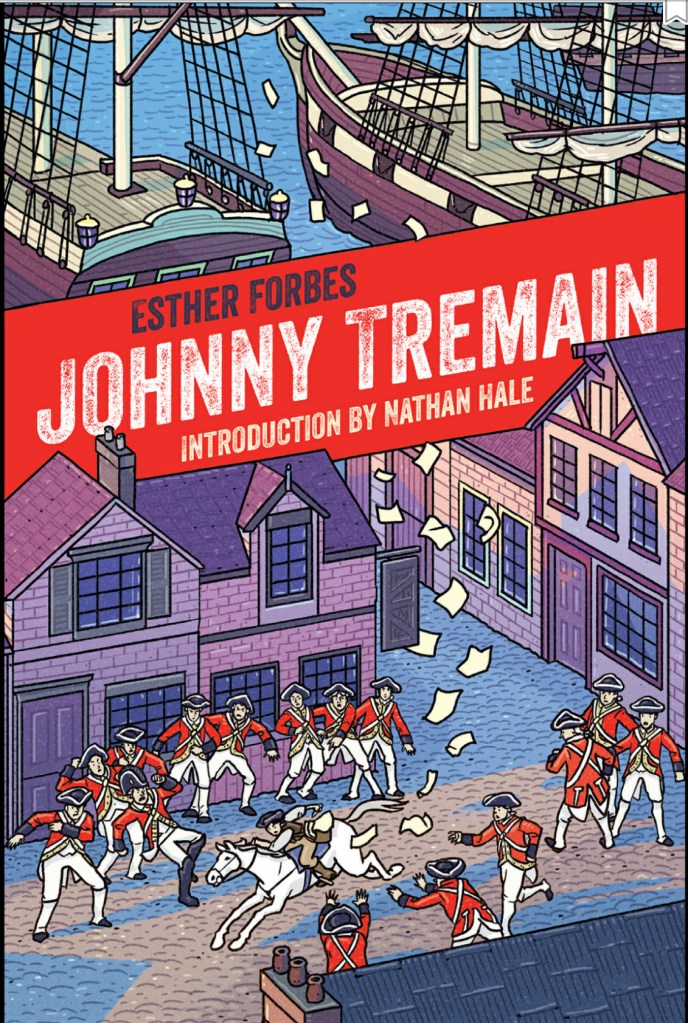
Title: Johnny Tremain: A Story of Boston in Revolt
Author: Esther Forbes
Published by Clarion Books
Edition: 75th Anniversary ed. edition (September 11, 2018)
Format Read: Kindle
Pages: 323
Language: English
ASIN: B07FK993XT
First Published by Houghton Mifflin in 1943
Dates Read: 2024, May 30 to June 16

Sometime in 2023, I developed an interest in the 18th century, especially Colonial America. I don’t remember the exact reason why I gained this sudden interest, but it may have to do with how I’m constantly seeing pins on Pinterest of portraits and clothing from those eras. Additionally, I have been trying to find novels about male friendships and adventures.

I remembered hearing about this book in elementary school, but I had never seen the movie. I knew that the novel is a Newbery Award winner. In college, I had to write a paper on the Newbery award. Although I had not read it, I used a line from the book because I needed more primary sources related to my paper’s topic. Also, I knew that there is a song in the movie about a tree that my parents would randomly sing. Finally, I became curious to actually read Johnny Tremain.

In this edition, there is a comic at the beginning that introduces the characters and a brief overview of the novel’s setting. It does not reveal huge spoilers which is helpful for people reading this story for the first time. First of all, the protagonist is much, much different than I thought. Based on my experience with retro media,  I assumed that Johnny was going to be a goody-two-shoes, archetypal, heroic school boy— naive, innocent, and extremely lovable in every way. He may have been a bit like Dick from the Dick and Jane books, the brothers from Leave It to Beaver, or Opie from The Andy Griffith Show. Instead, the boy is so full of pride and angst— angst and pride— he goes back and forth. He is a bit hot-headed, and teases plenty, but he does grow during the course of the novel. 

Since the book was written in the 1940s, and there are black characters, I was expecting the stereotypes to be cringy, and they are, just a little. I thought it was odd that the author used “black” but never “Negro” and seldom “colored”. I assumed in the ‘40s or 1770s colonial era that these were the terms used, and that “Black” wasn’t used regularly until the 1970s, along with “African American.”

I thought there would be some Indigenous characters, even if they were characterized flatly or stereotypically. However, there are none that I recall, but I could have sworn that it was going to be revealed that Rab is part Native American. This is due to the way that he is described with elements like: “dark boy,” “muscular, brown throat,” “teeth look sharp and white,” “calm demeanor,”  and an odd last name, Silsbee, which sounds like a tribe (although the name is of English origin). It’s like the author is trying to hint at something— that he is not completely white—but it’s never stated. Johnny’s immaturity and angst contrasts with Rab’s collected, methodical, cool outlook, and their differences go together well as good friends. To me, the narrator relays Rab as almost perfect. His portrayal throughout the plot and what happens to him at the end of the story displays that he is almost the hero character and an ideal. The way Johnny idolizes Rab, despite some annoyance and jealousy at his actions, and seems to like him more than Cilla, displays such a deep, endearing friendship.

There is actually quite a bit of humor in this story, despite the fact that the plot culminates in a war. I enjoyed the episodic nature of the story and the slice-of-life adventures of Johnny, which saturate the reader in the setting’s world and provide ample characterization. I was especially surprised at the relay of the Boston Tea Party; it was like manual labor, an arduous task, not a feel-good party with dancing and craziness. How much early American history did I forget? The speech against tyranny and what they are trying to do right before the start of “The Scarlet Deluge” chapter definitely reminds me of WWII and other parallels. I liked this book, and I’m glad I finally read it, especially this version— and not the other published book with the boy and blue background. When I read the beginning of that one after finishing this novel, that introduction spoiled the entire novel, so I was happy to find a version to read without many major spoilers. 

About The Song of Albion

Years ago, I was looking for Christian fantasy or fantasy with Christian themes that people like to read besides The Lord of the Rings and The Chronicles of Narnia. First published in the 1990s by a different publisher, I found these Kindle formats published by Thomas Nelson. I had a basic understanding of what this series was about from reading blurbs. Well, these are my prominent thoughts after reading this series.

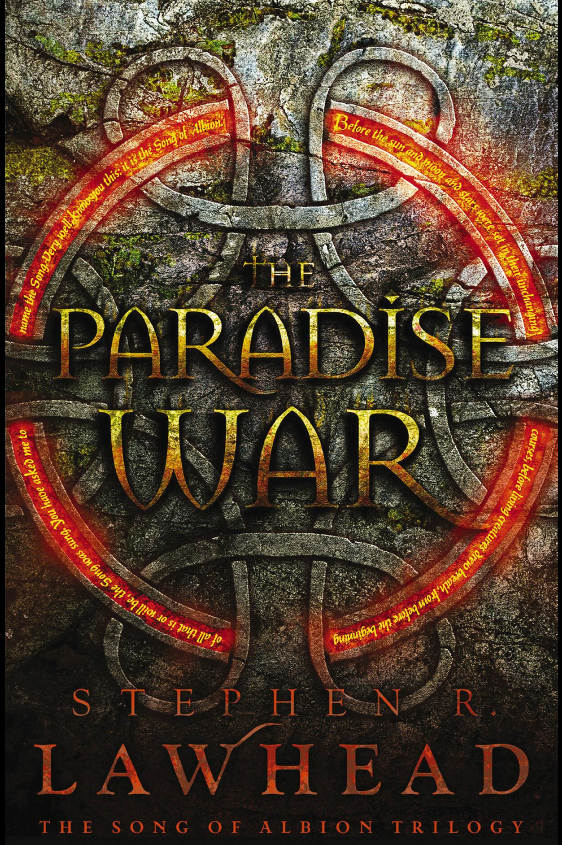
Title: The Paradise War
Series: The Song of Albion
Serial: Book 1
Author: Stephen Lawhead
Published by Thomas Nelson
Edition Year: 2010
Format Read: Kindle
Pages: 465
Language: English
ASIN: B003DS6OMO
Dates Read 2023, May 22 to June 25

One of the interesting things that I noticed is the modern setting and how much technology has changed. It takes place in the 1990s, so Oxford students use the landline phone and map instead of GPS. I liked how the narrator and his friend who are graduate students actually talk like they are smart and make neurotic complaints. Reading the first few chapters, I thought this novel was going to be a ‘bro’ adventure/ best buds tale, but the friendship just seemed a bit dysfunctional. I thought that this was going to be a best friend adventure where they end up better friends by the end of the book or even series. Hahaha. Anway, many of the books published by Christian publishers or labeled “Christian fiction” that I have read so far tend to have minimal to no profanity; therefore, I was surprised at the amount of swearing in the first few chapters. The swearing is mild and does make the dialogue between two college students seem realistic/provide characterization. Anyway, the chapters started to drag, and I wondered when the main character would finally enter the otherworld realm. He finally does, then the story gets immensely better. I love the protagonist’s humor and disgust. You can tell that the narrator matures. The swearing really dissipates, and the language is cleaner once Lewis enters the otherworld. It stays minimal throughout the entire three books. However, we have other mature themes such as descriptions of violence, alcohol references, building peril, scenes of war, deaths and some suggestive themes throughout the rest of the series of novels. Yet, the narrator discusses how wonderful the world is- like a New Heaven. He doesn’t want to leave. Being there awakens in himself a deep longing. If I’m not mistaken, this thought echoes writers like Alcorn, Tolkien, and Lewis. The Otherworld is like a Paradise, and fantasy echoes longing for a better world. After reading this first book, I became very curious about the author’s sources, inspiration, and background. Having to worldbuild 2 worlds!

Screenshot 2024-03-30 185251

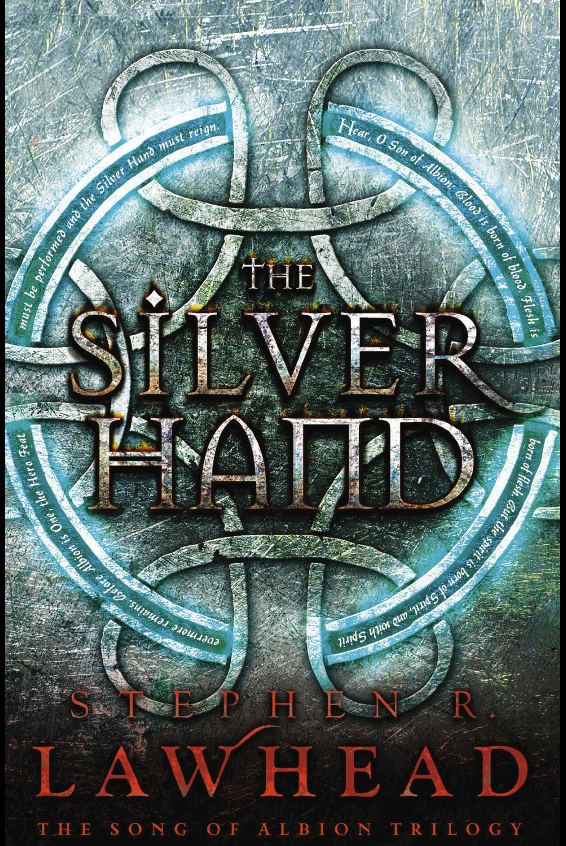
Title: The Silver Hand
Series: The Song of Albion
Serial: Book 2
Author: Stephen Lawhead
Published by Thomas Nelson
Edition Year: 2010
Format Read: Kindle
Pages: 448
Language: English
ASIN: B003DS6OOM
Dates Read 2023, June 27 to July 22

Although the novel is still in first person, it took a moment for me to realize that Tegid narrates this novel. I loved the camaraderie and brotherly affection between Tegid and Llew. There is a recap of the last book, and some mysterious, unexplained things are explained. A minor criticism I have is that there is too much detail in some places like descriptions of the characters traveling, but not enough detail of some of the characters at times when I would like more detail. However, several scenes evoke beauty and transcendence. The story gets a bit gritty and violent with descriptive deaths and mentions of rape. I understand that it’s a war, but I was very annoyed with all of the character deaths. Several of the main likable characters you are introduced to in the first novel end up dead in this novel. There are not a lot of women main characters to begin with, so it’s annoying that some are killed. Moreover, some dialogue and passages seem contrived and wooden. The villains are really monsters, and I finally see that Llew’s buddy from the modern world may not be a redemptive character after all. I’m glad the book ends well, and it’s an actual ending.

Screenshot 2024-03-30 192622

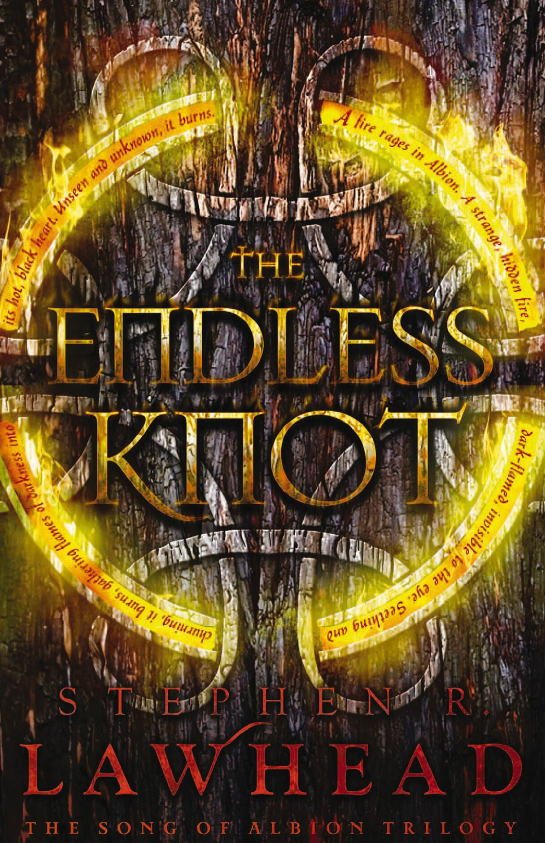
Title: The Endless Knot
Series: The Song of Albion
Serial: Book 3
Author: Stephen Lawhead
Published by Thomas Nelson
Edition Year: 2010
Format Read: Kindle
Pages: 465
Language: English
ASIN: B003DS6OGK
Dates Read 2023, July 23 to August 31

In this novel, we return to Llew’s narration. The story is still interesting, but even more hero characters die. I didn’t know what to expect reading this book, and I kept hoping that the ending would be okay. I’m glad the story finally ended, but to me, the ending was a bit bittersweet. Also, I had a few outstanding questions about kingship and the way time works in the worlds.

Overall Impressions and Other Comments

Overall, this was a decent series; however, I didn’t fall in love with it like so many people did. I loved the Celtic alphabet pronunciation guide at the beginning of each book. I also appreciated the interview with the author at the back of each book. It was pretty cool to read an entire fantasy series with first-person narration. The Celtic fantasy with Christian themes was awesome. However, I thought that the villain would be redeemed, not basically become Satan. I probably thought this because so much time is given to his ramblings at the start of the series, and his friendship with Lewis is emphasized. Anyway, another minor matter is that some events happened, and I wanted more explanation. Some random events occurred and there was either not enough detail or too much detail. A major grievance is that too many hero characters died, especially women. Despite everything, I’m glad that I read this series.