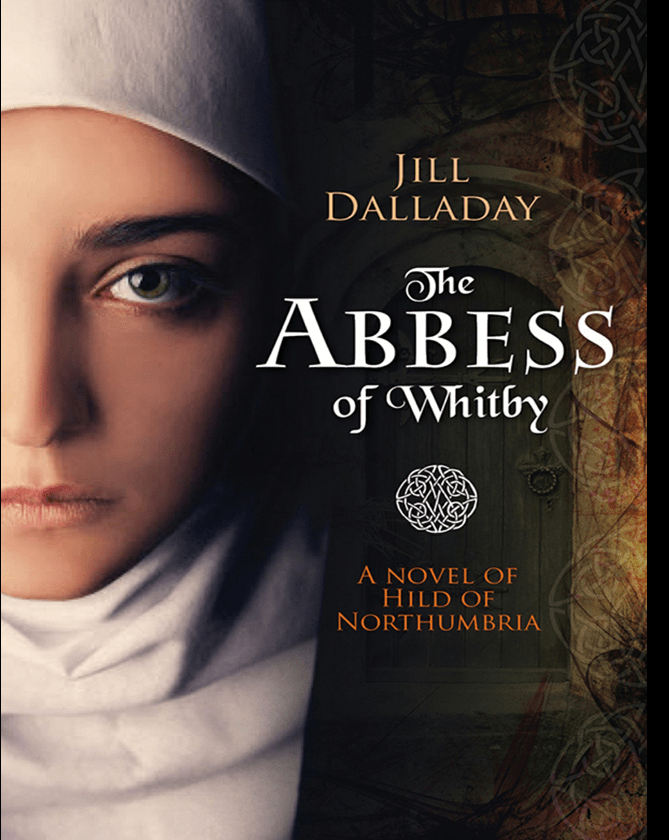
Title: The Abbess of Whitby: A novel of Hild of Northumbria
Author: Jill Dalladay
Published by Lion Fiction
Year: 2015
Format Read: Kindle
Pages: 380
Language: English
ASIN: B0156O6148
Dates Read: 2023, January 7 to 28
I found this book while browsing for different types of Christian books to read. I wanted to read a biography or historical fiction novel about a nun. Although I was unfamiliar with Hild of Whitby or Northumbria, this book seemed interesting.
The story takes place in 7th century Northumbria. This is a prose novel, but like a play, the author lists virtually all of the characters who will be in the story at the start of the book. She also lists maps, a family tree, and well-titled chapters. All of this detail before the story begins made me wonder if I would be able to keep up with all the details through the story, but it ended up being nothing to worry about. I like Dalladay’s writing style. Many sentences are packed full of detail, unusual words, and read rhythmic like poetry.
All types of events and adventures happen fast: conquests, battles, festivals, riding, etc. Many characters are historical figures, and many events that occur are recorded in history. While Hild is the novel’s main character, many others receive ample attention. I’ve never read a novel with so many historical characters, but thankfully, I was able to keep up. I only confused around 3 characters because they had similar sounding names.
The dynamic in the first part of the novel was the most intriguing to me: King Edwin and his people are pagans. Queen Elthelberga is a Christian from another place whom he married. She came to his kingdom with her own chaplain, monks, and other Christian people. Her chaplain is constantly striving for a Christian influence in the kingdom. Hild is growing up during this time. She, her sister, and mother are handmaidens to the queen and serve the king’s court.
Hild and others have to accept a compulsory baptism. She still prays to older gods and believes in them for years. Eventually, she grows to appreciate the Christian teachings and the monks’ gospel work. The dynamic with her husband and son are so fascinating, deep, and tragic that I was surprised that they were some of the few non-historical characters. By the last part of the book, she is helping to lead a double monastery or mixed community. This was cool to read about. You have people who are a part of the order but lay people as well. They help each other out. It seems like an amazing community with people of different stations. The monks spread literacy, travel to other places, and just seem to have so much peace and joy in life. A lot of people visit as well. They trade scrolls of scripture and enjoy teaching. Hild helps operate the community and the infirmary for the sick. The children help, play, and hunt. Caedmon makes a cameo, and he makes music.
This book was amazing to read, and I loved it. I especially enjoyed reading about the love that the different Christians had for each other and the gospel; this made me feel like I was transported far above the daily grind. I read online that the author passed away in 2019; I would have loved to read more of her books.
Some Quotes:
The chapel looked like a workshop: plain, bare wood, with monks on either side of a cross on a table. The queen knelt, head in hands, soft skirts fanning out in the straw. In a monotone, one group echoing the other, the men chanted softly. Mesmerized, Hild felt herself relax. So this was Ethelburga’s secret. Far from kindred, ill-matched consort of a fierce old warlord, prey to insult and pain, she always shed calm. It came from worshipping her God. There was no climax, none of Thor’s frenzy, no High Priest or sacrifice. The singing simply stopped, leaving an echo in the stillness. Then the monks bustled forward like ordinary men. (pg. 42)
“Erpwald!” Edwin had heard him. “Come and ride with me! About the route…” “Honoured, my lord.” He spurred forward: too eagerly for her liking. He was friendly, funny, and she wanted to know him better. Coifi, the king’s priest, awaited them in a hilltop grove, his white robes shining through the trees. His stance, his stillness, made Hild shudder; someone had told her that, before living memory, Eostre’s maid was herself the spring sacrifice. “Name?” With a start she saw Coifi holding out his arms for the child. “Anfled.” Edwin’s voice rang out. “To Woden’s shrine,” Coifi cried, bearing the baby into the trees. “Follow me!” (pg. 51)
Credo in unum Deum… Surprisingly soon she was, slowly and laboriously, writing the familiar Latin words. I believe in one God… And she really did, she realized with amazement. It had taken an age to shake off Thor and the fear of woods and thunderclaps, but at last she was winning through. Her new God did not mete out erratic punishments. He loved her as his daughter. “The Creed, summary of Christian belief,” Utta explained. “That and Jesus’ model prayer. The two basics.” And with a new clarity she understood why each convert must take them to heart before being baptized. (pg. 253)
 A Love So Wordy