In Appreciation of Agnes Grey

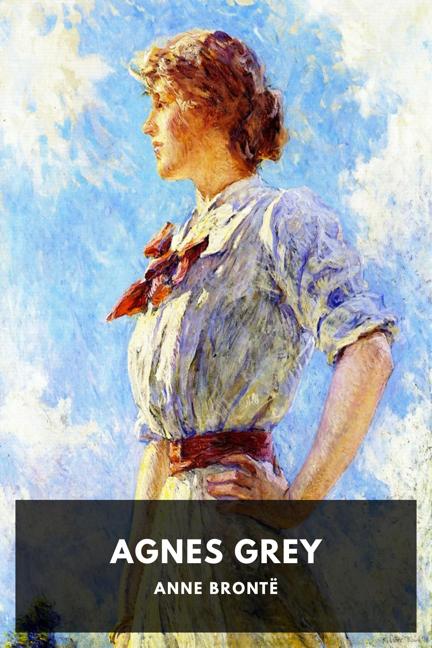
Title: Agnes Grey
Author: Anne Brontë
Edition: Standard Ebooks (2022)
Format Read: Kindle
Length: 222 pages (Kindle)
Language: English
URL: https://standardebooks.org/ebooks/anne-bronte/agnes-grey
First Published: 1847 by Thomas Cautley Newby (London)
Dates Read: 2026, April 21 to May 26

A Fresh Start
Reading through the works of the Brontës has been a desire of mine ever since I read Jane Eyre in high school. I tried to read Wuthering Heights several years ago, but for some reason, I did not finish it. I finally decided to attempt reading through the Brontë canon again. Instead of picking up where I left off, I chose to read Agnes Grey as a starting point.

Reflections 
This book was wonderful, profound, and not what I expected. One of the first things I appreciated was how quickly the story gets underway. The chapter titles provide a sense of direction, and the story feels just the right length. At fewer than 230 pages in the edition that I read, the book never felt too short or too long.

What stood out most to me, however, was Agnes herself. Her inner thoughts and feelings are presented with remarkable depth, making her both believable and relatable. More than once, she reminded me of myself. Throughout the novel, Agnes reflects carefully on her actions, motives, and interactions with others. Her observations feel sincere, and her narration carries a sense of consideration for the reader. Through her descriptions, Anne Brontë paints vivid portraits of the people Agnes encounters, allowing readers to understand both the characters themselves and Agnes’s responses to them.

So much in this book reminded me of myself and of various interactions that I have had with people. I saw aspects of myself in Agnes’s awkwardness and her struggles to make herself understood. There were moments when she knew what she meant in her own mind, yet those around her perceived her words and actions differently. She often found herself unable to explain herself as clearly as she wished.

I also related to Agnes’s tendency to wonder whether or not her efforts were accomplishing anything at all. At times, she believed she was making progress, only to discover that others saw the situation differently. She would replay conversations in her mind, regret what she said or felt, then wish that she had expressed herself better. This reminded me so much of my constant battle with rumination and overthinking random past actions.

The portrayal of unruly children and indulgent parents felt surprisingly modern. Reading Agnes’s experiences often felt like reading the thoughts of a present-day teacher. Children misbehaving and parents blaming the teacher rather than addressing the behavior themselves is apparently not a new phenomenon. The novel was hilarious and tragic at the same time. 

An observation I found particularly interesting was Agnes’s assumption that other children would be much like herself and her sister. She soon discovers that they are not, and that other families can act very differently from her own. I relate to that realization because I often assume that other people think, behave, and reason the way I do, only to discover that they do not.

I also appreciated Agnes’s concern that the people around her might negatively influence her character. At one point, she worries about bad company corrupting good habits, and I understood exactly what she meant. Many of the bad habits I picked up in life came from being around other people rather than from my upbringing. Public school introduced me to behaviors and attitudes that never would have occurred to me otherwise. Even now, I can relate to leaving home with a peaceful mind only to arrive at work and find myself surrounded by gossip, profanity, and unnecessary drama.

The novel has a particularly pronounced Christian worldview. I loved Agnes’s analysis on sermons, Scripture, and religious instruction. I admired the way Agnes integrates her Christian faith into her moral reflection, self-examination, and perseverance. When faced with difficulties, she continually evaluates her own conduct, considers how she might improve, and strives to endure with patience. Agnes was determined to keep trying different approaches when her efforts seemed unsuccessful. These elements do not feel forced. They naturally arise from her character and the way that she understands the world. The story also engages with themes such as scrupulosity, lack of empathy, and resilience—subjects that I have been thinking about quite a bit lately. 

Because the novel is written as a retrospective first-person account, Agnes can choose what to gloss over and what to describe in detail. I assumed that the novel would remain focused primarily on Agnes’s observations of society, her efforts to remain principled, and the obstacles and hopes she encounters as a governess living away from her family. However, the narrative undergoes a tonal shift after she meets Weston, introducing a stronger romantic element. It was interesting to watch the focus of the narrative change over time.

Content Advisory
While reading through the novel, I made an effort to note some potential concerns.
Language: A few uses of d*mn or d*mned, a few uses of bl**dy, and a use of *ss as a term of insult.
Violence: Animal cruelty; unruly and destructive behavior by children.
Grief & Loss: Mentions of death, bereavement, and family grief.

Favorite Quotes
I can conceive few situations more harassing than that wherein, however you may long for success, however you may labour to fulfil your duty, your efforts are baffled and set at nought by those beneath you, and unjustly censured and misjudged by those above. (pg.38)

I have not enumerated half the vexatious propensities of my pupils, or half the troubles resulting from my heavy responsibilities, for fear of trespassing too much upon the reader’s patience; as, perhaps, I have already done; but my design in writing the few last pages was not to amuse, but to benefit those whom it might concern; he that has no interest in such matters will doubtless have skipped them over with a cursory glance, and, perhaps, a malediction against the prolixity of the writer; but if a parent has, therefrom, gathered any useful hint, or an unfortunate governess received thereby the slightest benefit, I am well rewarded for my pains. (pg.38)

I sometimes felt myself degraded by the life I led, and ashamed of submitting to so many indignities; and sometimes I thought myself a fool for caring so much about them, and feared I must be sadly wanting in Christian humility, or that charity which “suffereth long and is kind, seeketh not her own, is not easily provoked, beareth all things, endureth all things.” (pg.77)

I did hear him preach, and was decidedly pleased with the evangelical truth of his doctrine, as well as the earnest simplicity of his manner, and the clearness and force of his style. It was truly refreshing to hear such a sermon, after being so long accustomed to the dry, prosy discourses of the former curate, and the still less edifying harangues of the rector. (pg.89)

Habitual associates are known to exercise a great influence over each other’s minds and manners. Those whose actions are forever before our eyes, whose words are ever in our ears, will naturally lead us, albeit against our will, slowly, gradually, imperceptibly, perhaps, to act and speak as they do. I will not presume to say how far this irresistible power of assimilation extends; but if one civilised man were doomed to pass a dozen years amid a race of intractable savages, unless he had power to improve them, I greatly question whether, at the close of that period, he would not have become, at least, a barbarian himself. And I, as I could not make my young companions better, feared exceedingly that they would make me worse⁠—would gradually bring my feelings, habits, capacities, to the level of their own; without, however, imparting to me their lightheartedness and cheerful vivacity. (pg.107)

Well! what is there remarkable in all this? Why have I recorded it? Because, reader, it was important enough to give me a cheerful evening, a night of pleasing dreams, and a morning of felicitous hopes. Shallow-brained cheerfulness, foolish dreams, unfounded hopes, you would say; and I will not venture to deny it: suspicions to that effect arose too frequently in my own mind. But our wishes are like tinder: the flint and steel of circumstances are continually striking out sparks, which vanish immediately, unless they chance to fall upon the tinder of our wishes; then, they instantly ignite, and the flame of hope is kindled in a moment. (pg.170)

He had not breathed a word of love, or dropped one hint of tenderness or affection, and yet I had been supremely happy. To be near him, to hear him talk as he did talk, and to feel that he thought me worthy to be so spoken to⁠—capable of understanding and duly appreciating such discourse⁠—was enough. (pg.180)

Reading The Abbess of Whitby

Title: The Abbess of Whitby: A novel of Hild of Northumbria
Author: Jill Dalladay
Published by Lion Fiction
Year: 2015
Format Read: Kindle
Pages: 380
Language: English
ASIN: B0156O6148
Dates Read: 2023, January 7 to 28

I found this book while browsing for different types of Christian books to read. I wanted to read a biography or historical fiction novel about a nun. Although I was unfamiliar with Hild of Whitby or Northumbria, this book seemed interesting.

The story takes place in 7th century Northumbria. This is a prose novel, but like a play, the author lists virtually all of the characters who will be in the story at the start of the book. She also lists maps, a family tree, and well-titled chapters. All of this detail before the story begins made me wonder if I would be able to keep up with all the details through the story, but it ended up being nothing to worry about. I like Dalladay’s writing style. Many sentences are packed full of detail, unusual words, and read rhythmic like poetry.

All types of events and adventures happen fast: conquests, battles, festivals, riding, etc. Many characters are historical figures, and many events that occur are recorded in history. While Hild is the novel’s main character, many others receive ample attention. I’ve never read a novel with so many historical characters, but thankfully, I was able to keep up. I only confused around 3 characters because they had similar sounding names.

The dynamic in the first part of the novel was the most intriguing to me: King Edwin and his people are pagans. Queen Elthelberga is a Christian from another place whom he married. She came to his kingdom with her own chaplain, monks, and other Christian people. Her chaplain is constantly striving for a Christian influence in the kingdom. Hild is growing up during this time. She, her sister, and mother are handmaidens to the queen and serve the king’s court.

Hild and others have to accept a compulsory baptism. She still prays to older gods and believes in them for years. Eventually, she grows to appreciate the Christian teachings and the monks’ gospel work. The dynamic with her husband and son are so fascinating, deep, and tragic that I was surprised that they were some of the few non-historical characters. By the last part of the book, she is helping to lead a double monastery or mixed community. This was cool to read about. You have people who are a part of the order but lay people as well. They help each other out. It seems like an amazing community with people of different stations. The monks spread literacy, travel to other places, and just seem to have so much peace and joy in life. A lot of people visit as well. They trade scrolls of scripture and enjoy teaching. Hild helps operate the community and the infirmary for the sick. The children help, play, and hunt. Caedmon makes a cameo, and he makes music.

This book was amazing to read, and I loved it. I especially enjoyed reading about the love that the different Christians had for each other and the gospel; this made me feel like I was transported far above the daily grind. I read online that the author passed away in 2019; I would have loved to read more of her books.

Some Quotes:

The chapel looked like a workshop: plain, bare wood, with monks on either side of a cross on a table. The queen knelt, head in hands, soft skirts fanning out in the straw. In a monotone, one group echoing the other, the men chanted softly. Mesmerized, Hild felt herself relax. So this was Ethelburga’s secret. Far from kindred, ill-matched consort of a fierce old warlord, prey to insult and pain, she always shed calm. It came from worshipping her God. There was no climax, none of Thor’s frenzy, no High Priest or sacrifice. The singing simply stopped, leaving an echo in the stillness. Then the monks bustled forward like ordinary men. (pg. 42)

“Erpwald!” Edwin had heard him. “Come and ride with me! About the route…” “Honoured, my lord.” He spurred forward: too eagerly for her liking. He was friendly, funny, and she wanted to know him better. Coifi, the king’s priest, awaited them in a hilltop grove, his white robes shining through the trees. His stance, his stillness, made Hild shudder; someone had told her that, before living memory, Eostre’s maid was herself the spring sacrifice. “Name?” With a start she saw Coifi holding out his arms for the child. “Anfled.” Edwin’s voice rang out. “To Woden’s shrine,” Coifi cried, bearing the baby into the trees. “Follow me!” (pg. 51)

Credo in unum Deum… Surprisingly soon she was, slowly and laboriously, writing the familiar Latin words. I believe in one God… And she really did, she realized with amazement. It had taken an age to shake off Thor and the fear of woods and thunderclaps, but at last she was winning through. Her new God did not mete out erratic punishments. He loved her as his daughter. “The Creed, summary of Christian belief,” Utta explained. “That and Jesus’ model prayer. The two basics.” And with a new clarity she understood why each convert must take them to heart before being baptized. (pg. 253)

A Meander Through The Tahn Saga

I was trying to find Christian fiction to read, and I found this series listed on the www.christianbook.com website. I thought that it was a Christian fantasy series, but it is more of a medieval fiction series with historical liberties.

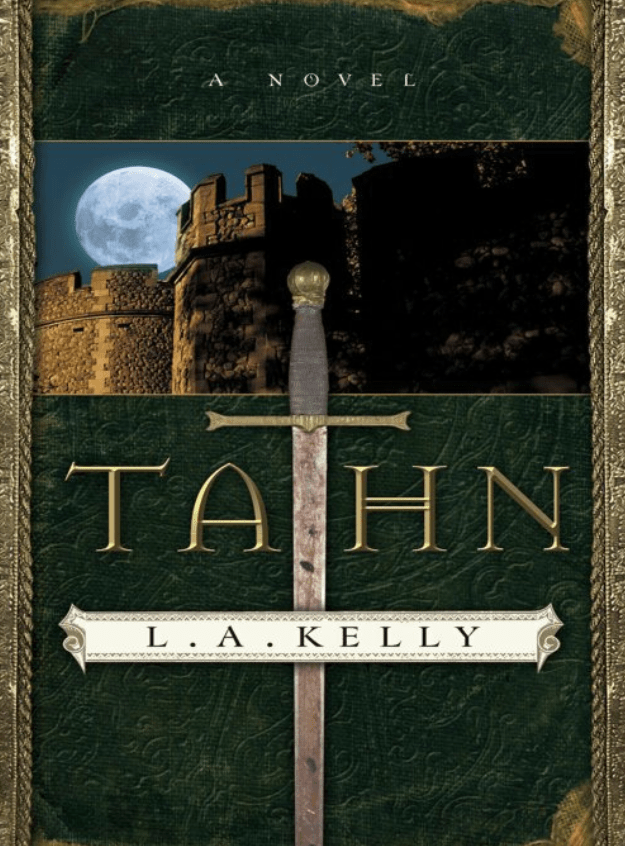
Title: Tahn: A Novel
Series: The Tahn Saga
Serial: Book 1
Author: L.A. Kelly
Published by Fleming H. Revell
Year: 2005
Format Read: Kindle
Pages: 337
Language: English
ASIN: B00B85CMR0
Dates Read 2022 November 24 to November 26

Before the story begins, Kelly includes an author’s note explaining why she wrote the book. She was propelled to write it, and she hoped that the message of God’s mercy, love, and forgiveness are evident throughout the work. She does state that the book cannot be defined as truly historical fiction that takes place in Europe. The story “claimed a place and time all its own…” (page 8).

Within the first chapters, there is a lot of action and violence; Tahn kills a few people just within the first few pages. Tahn has to do the bidding of his evil mercenary master Samis. Samis took Tahn from a city as a child. Samis trained him to steal, kill, and destroy at his request. Even before the woman Netta, who Tahn kidnaps, shares the gospel with him, he is already somewhat redemptive. He had made the decision to disobey Samis and rescue several children from his lair. Tahn is trying to protect Netta’s life, honor, and he is not mercilessly mean. Despite all that she goes through, Netta is very devout: she teaches and preaches about the Christian faith throughout the entire novel. There are a lot of mini sermons and lessons; this book seems like something that Lynn Brooks could narrate on BBN radio during the time slot that they have her narrate a Christian story. There are several characters in this novel that have more characterization and emphasis in the next two novels. Not everyone accepts Christ, but a lot of the characters do. The events do have a good resolution, and a person could stop reading the series at the first novel.

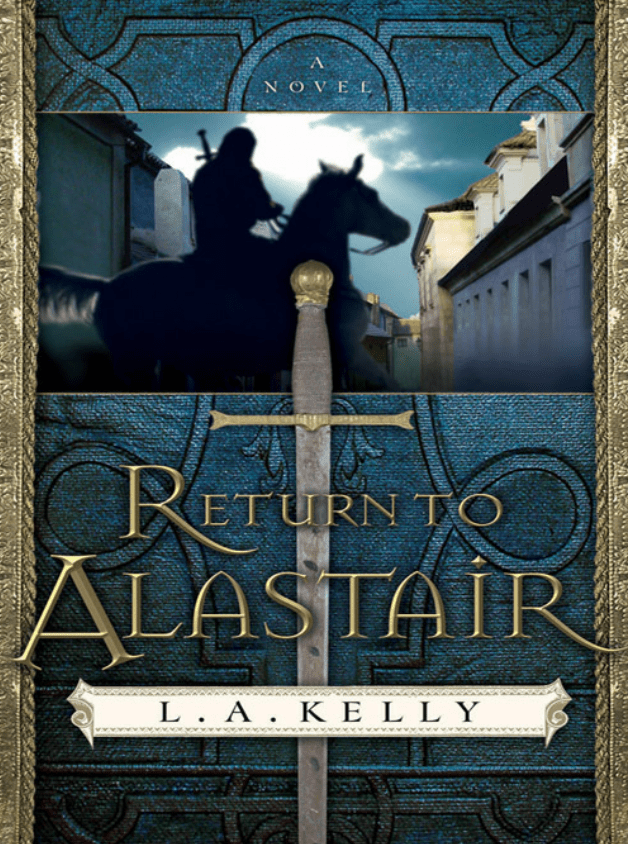
Title: Return to Alastair
Series: The Tahn Saga
Serial: Book 2
Author: L.A. Kelly
Published by Revell
Year: 2006
Format Read: Kindle
Pages: 369
Language: English
ASIN: B00B85CN8I
Dates Read 2022, November 27 to December 5

As of writing this, the book series is still out of order on Amazon. The website has this book listed as the last book in the series, but it is the second. There is no author’s note in this one. This book has many of the same characters as the first one, and it introduces some new characters, namely Tahn’s sister Tiarra. You learn how Tahn is related to nobility, and it’s another adventure. However, Tahn is sick for several pages, and it seems like the dreams he has while sick reveals a lot of the plot’s mystery.

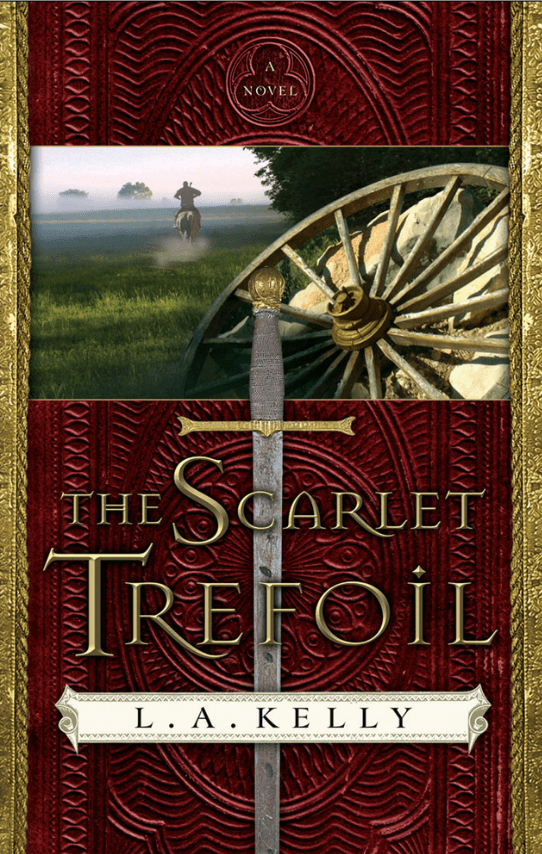
Title: The Scarlet Trefoil
Series: The Tahn Saga
Serial: Book 3
Author: L.A. Kelly
Published by Revell
Year: 2007
Format Read: Kindle
Pages: 305
Language: English
ASIN: B007TV0VVG
Dates Read 2022, December 9 to December 17

This book was more perilous and darker than the last two. It was hard to pause reading because many chapters end pitifully, and I kept wanting to take a break from reading on a happy note. It was a bit anguishing to read about Netta’s kidnapping and Tahn’s abuse at the hands of the bandits and others paid by Lionell Trent. Throughout the story, there is such an overwhelming amount of thoughts and emotions that to me, it started to get a bit repetitive. I know how all of the characters feel, please let’s continue advancing the plot. In my opinion, it was too much talking and feelings and not enough action.


Overall Impressions and Other Comments

This is a decent Christian fiction series. I thought that the series had a lovely ending. Although several priests are mentioned, and the setting is loosely based on Medieval Europe, there is emphasis on general themes of Christianity common to Catholic, Protestant, and Orthodox. There is no mention of Mary, saints or The Five Solas. There is emphasis mainly on God’s providence, trust, prayer, assurance, forgiveness, stewardship, and redemption.

If any of the characters are memorable to me, they would be Tahn and Lucas. I loved their platonic relationship the most. I appreciated the camaraderie that Tahn, the Trillets, and others had with the children.

The one thing that I found confusing is what dialogue belonged to which character. Usually, when a different character speaks, a new paragraph is started, but here not so:
“What can you tell us?” Netta whispered to Amos. “He rests well. Breathes stronger.” This is on pg 195 of The Scarlet Trefoil and it was hard for me to see that Amos started taking after Netta because both sets of dialogue are in the same paragraph.

There were some unrealistic elements to me. This could be historically accurate, but I did find it weird that people wear boots without stockings, socks, etc. Also, another odd thing is how Tahn’s relative complains about being barefoot throughout several pages, but I kept wondering what does she do during the winter. It was odd that Tahn is forced to walk barefoot for miles, but his feet do not hurt, just other parts of his body from injury. The scene where Tahn takes off Netta’s shoe to examine her ankle just seemed really forward of him, and I felt it could have been written better. The series increasingly has a lot of dialogue with a lot of emphasis on the various characters’ thoughts and feelings; I started to desire more action. The plot and story advancement takes a halt in order for us to review every thought and mental process of various characters.

Unfortunately, the author passed away in 2011 years ago with one of her children in a car accident. She wrote other books under her name Leisha Kelly. They look interesting, and I may try to read her other works.

Regarding Daughter of Rome

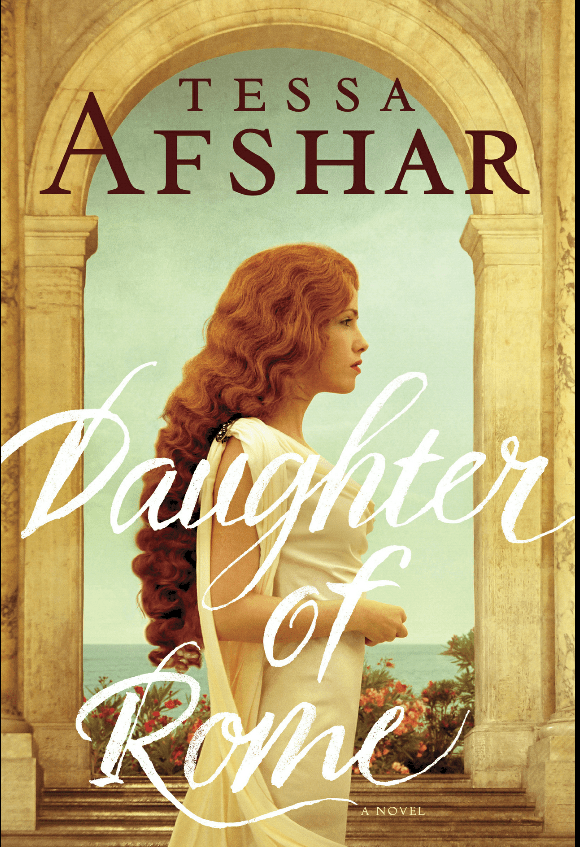
Title: Daughter of Rome
Author: Tessa Afshar
Published by Tyndale House Publishers
Year: 2020
Format Read: Kindle
Pages: 378
Language: English
ASIN: B07T32RZMF
Dates Read: 2022, October 22 to October 30

The book was captivating. Every chapter is an adventure. The character, themes, and touching moments really pack a punch, and there is an edifying sermon every chapter. After reading Thief of Corinth, I wanted to read another book by this author. Priscilla and some others make a cameo appearance in Thief of Corinth. Some characters from that novel are mentioned in Daughter of Rome. I like how Afshar’s novels are somewhat linked, but they are not a series so a person can start with any book. At the start of the novel, I knew why Priscilla was trying to see the physician even before the reason was revealed. This was the only predictable part of the book for me, and the rest of the book was more unforeseeable and engaging. 

The book gave me the impression that it would mainly be about Priscilla, but Aquila seems to have an equal part. They start out as both outcasts from their world who come to find love and acceptance. I love how the book shows that they are partners in ministry.  For some reason, while reading this book, I kept imagining it as an anime. I wish there was an anime like this and relatively clean, popular and made especially for Christians. I especially loved how the story demonstrates Christian characters releasing or overlooking offenses, being able to love, extending hospitality, and showing grace even to some of the most infuriating people. I enjoyed how the story shows both married and single people caring for each other in a community and having deep love, concern, and relationships with each other like adopted siblings.

One scene that I thought that could have been crafted better is when certain characters go to rescue Paul from a kidnapping. The scene reminds me a bit of “The Beggar’s Opera” by John Gay. Also, when the dog Ferox is introduced, I was given the impression that there would be a mysterious path there that would be eventually unraveled. He’s a mysterious dog that shows up out of nowhere. He saves Priscilla and is a part of the family but there’s no unraveling or discovery of his origins like there is for the orphan Marcus. Sometimes, to me, the romance scenes were very passionate and a bit more descriptive than I anticipated or thought necessary. Also, who gets her brother’s “estate” at the end or does it go to creditors? The book is a great read overall, and I look forward to reading Afshar’s other works. 

Reading Demon: A Memoir

Title: Demon: A Memoir
Author: Tosca Lee
Published by Howard Books
Year: 2015, first published in 2007
Format Read: Kindle
Pages: Approx. 300
Language: English
ASIN: ?
I couldn’t confirm this info, the Kindle version disappeared from Amazon at the time of posting this blog entry.
Dates Read: August 24 to September 20, 2022

Some years ago, I saw one of Tosca Lee’s books in a Christian bookstore, but it was not what I was looking for at the time. I made a note that she was an author whose works I might look into later. Here I am, years later, looking for Christian fiction to read. I found her books on Amazon, and this book’s description immediately captivated me the most. The entire book is narrated in first-person by the protagonist, Clay- and boy, it is some great first-person. The book’s narration is like watching a 1940’s film noir. Additionally, throughout the novel, there is a gloomy, menacing, impending doom feeling. The demon Lucian’s story is written like snippets of “Paradise Lost”  in today’s English.

 I understand that the story is going to have somewhat of a dark sentiment since it is about a demon; however, there is a bit of despair here as well. I started to feel so sad while reading this. I started to have difficulty motivating myself to finish the story. The demon is condescending and annoying without the wit of the demons in The Screwtape Letters. However, some  parts of this story are intriguing. It is interesting how the demon states that he enjoyed watching Adam and Eve and that he was sad when the serpent tempted them. The best part of the story, in my opinion, is when Lucian discussed the Nativity and described it from the demons’ perspective. 

Ultimately, to me, the ending was unsatisfying. At the very least, I expected Clay to clearly and distinctly come to Christ after all that he had been through. He just states that he is going to make some decision and that is all that we are told. The Author’s Notes section in the book’s back are extremely helpful. She describes the demon’s story concept, the scripture references, and the scholars/Bible commentaries. I wish that I had read that section before reading the actual story, so that I had more context. 

Contemplating Lost in Darkness

Title: Lost in Darkness (Of Monsters and Men)
Author: Michelle Griep
Published by Barbour Books
Year: November 2021
Format Read: Kindle
Pages: 323
Language: English
ASIN: B09FP1WHKN
Dates Read: August 1 to August 8 2022

I was enthralled by Gallimore, so I wanted to read another book by this author. Since I absolutely loved reading Frankenstein in school, I decided to go with Lost in Darkness, a Christian novel inspired by the famous assigned reading. Each chapter begins with a quote from Shelley’s famous novel. The story setting is in 1815, England. I thought that it would take a few chapters to build intrigue, but the story immediately starts out dynamic. The entire novel has a pensive and/or ominous mood with just a few funny moments. It was a nice nod of Griep to write Mary Godwin/Shelley into the novel as a character-an eventual neighbor of main character Amelia. The historical notes and bibliography were very helpful in understanding time period elements included in the story.

Several of the characters are Christian. At various times, one will act or say something super devout and full of spiritual wisdom, then at other times, the same character acts like someone new to the faith and full of doubt. Moreover, it’s like everyone, whether antagonist or protagonist, is kind of lost in their own darkness of some sort (unmended relationships, choices, full of regret, unruly emotions, pride).

For me, this story’s ending is bittersweet. I thought that the brother would have had a more satisfying ending. While reading the novel, I was thinking that either the surgery would be successful or that he would not have the surgery at all. I thought that either way, he would be able to go on with his life by the story’s end. He was portrayed as such a comprehensive and good-natured character that I was not expecting such a tragic end. I know that Frankenstein was not exactly a happy ending either, but I thought this novel would be a bit more hopeful. It was actually more realistic here than science fiction and fantastical. I thought that maybe he would actually get to have a normal appearance, but he has to learn not to become arrogant or something. Also, to me, it felt like the ending for the antagonist could have been different-something felt missing-perhaps a trial scene? However, the romance and career aspects among the two leads end rather well.

Considering Gallimore

Title: Gallimore

Author: Michelle Griep

Published by Black Lyon Publishing

Year: 2009

Format Read: Kindle 

Pages: 227

Language: English 

ASIN: B002RHP56S

I am trying different authors and genres. I found this author on a blog; the blogger reviews a lot Christian fiction, and she was reviewing one of Griep’s books. I had a look at her books on Amazon, and I decided to read this one. This is probably the first time travel fiction novel that I have read since middle school. I really enjoyed this book! Although the opening chapter is sad, the rest of the story is extremely fun to read. The writing is both witty and profound, and the figures in the story have fantastic characterization. I am definitely interested in reading some of the author’s other writings.

In the acknowledgments, I love that Griep writes “To my own Captain of the Guard who will soon come for me. Rev.22:20”. The story emphasizes faith, God’s presence, God’s mysterious ways, burying grief, love, forgiveness, releasing pain. It’s interesting how the first chapter starts with Dan’s demise. Then, the story picks up with Jessica on a trip to England after the passing of her husband. She meets a stranger on the plane who gives her ideas for sightseeing. Eventually, she is caught in a storm while searching for Gallimore castle. She is “whisked away” to the 14th century. She meets several colorful characters including a forthright knight, the ancestor of the stranger on the plane, and his creepy villainous brother- the Earl who practices divination. Jessica’s exchanges with the characters are engaging! Some comments she makes about her dress, the foul odors, and treatment of the servants are realistic yet coated with humor. I was so caught up in the action that it was bittersweet when the storm came again and Jessica returned to the present. You know that she gets together with the guy from the plane and the miraculous event in her life is discussed in the epilogue. I love how the scenes are drawn and depicted.

Dates Read March 15 to March 26 2022

Thoughts on That Printer of Udell’s

Title: That Printer of Udell’s: A Story of the Middle West

First Published in 1903

Author: Harold Bell Wright

Edition: Free version with blue/gray cover on IBooks App

Pages: 362

IBooks

English

This book is also known by the title: The Least of These My Brothers

I have a few slight spoilers. 

I first heard about TPOU on BBN radio station. A lady narrates a Christian Classic book for about half an hour each day. I walked by the radio a few years ago, and I heard her narrating this book. It seemed interesting; I knew that I wanted to read it some day.

The author is very descriptive, writes good dialogue, and adds some touches of wit and dry humor into narration and characters. It’s a Christian novel, but it does not come off as preachy. It moralizes when needed and the doctrine of Christ completes the novel. The year is not stated but I’m pretty sure it’s the early 20th century going by the descriptions of the places that the book depicts. The main thrust of the book takes place over about a three year period. The setting is mainly Boyd City but also different midwestern states in the USA.

The main theme of the novel is Christianity and the Church’ s place in society, social justice, and the hearts of people. The main character who has had some rough times in his life, stumbles into town out of work but willing to work. He has a hard time finding employment; he is shown a lot of contempt by people although he wants to work! They judge him and make narrow minded comments. He seeks help from church but he is met with cold indifference and/or criticism. Eventually, he does find a job, and the plot takes off from there.

The book exposes a lot of the hypocrisy and folly of humans, whether they be infidels or church folk. The book also expresses the wisdom and virtue that humans, whether believer or none, can have as well. You have the characters that want to see the church doing more to help the fellow man before they will follow Christ. You have the characters who don’t want to be affiliated with church at all, and just want to drink or gamble. You have the characters who go to church because they are rich and well known and it’s the thing for aristocrats to do. You have the characters who earnestly follow Christ and are trying to get the church more involved in helping the downtrodden.

Throughout the novel, there is a dichotomy between Cultural/Nominal Christianity and Real/Active Christianity. The main character realizes that there are devout, real Christians and eventually becomes a Christian after seeing the positive in church people. Jerusalem Church’s young people along with Dick (Richard), the main character, actively seek societal reform in the name of Christ. The guy who hired him in the beginning, Udell, an infidel pragmatist, eventually becomes a Christian after witnessing such strong acts of love and social justice from the church.

Clara is George Udell’s love interest. They are engaged after Udell eventually becomes a Christian. Udell is the only one that hires Richard. Clara’s mother seems very contemptuous and critical towards everything, even her daughter being so involved in her youth group. It would have been great if the mother would have become a Christian by the end of the book. Amy is a society girl with class obsessed parents and brother. Her father especially mirrors the Pharaoh from Exodus in the Bible a bit too closely. His pride, criticism, and arrogance eventually drives Amy from the house. Amy is down on her luck and met with contempt in another city (similar to what happened with Dick). It’s soooo sad that the only person who shows her kindness is a brothel mother! Amy goes through a bit of a transformation as well as she begins to feel more useful, and she sees the emptiness of just being a society girl. Sadly, her father and brother never seem to change, Her brother is so contemptuous and dies a miserable death at the end.

There are other characters like Cameron the good hearted preacher whom the church elite is annoyed with for wanting to be so involved with the poor. His death was not something that I saw coming. I disliked that so much. Something else I disliked was how the black men were portrayed in this novel. I really wish that Wright would have just left out the black people from this novel if he was going to rely on one dimensional straw man caricatures. He mentioned there being Negroes in the city as part of the description. That’s fine, but the two characters he made a part of the story were like dense slapstick thugs. It didn’t fit in with a novel about helping people. Wright doesn’t use the notorious N word  in his narration. However,  some characters near the end use it in their dialogue, but they aren’t super likeable or sketched out characters anyway. None of the main characters that you are supposed to like use it. I know this is a novel from 1903; what should you expect right? So, I wonder what BBN did when they got to these parts. I only heard some of the book on the radio that day.

Overall, this book was a good read with intriguing drama. I like how the youth are portrayed as a driving force behind the church’s action. It’s nice to read a book like this with all the millennial bashing going on nowadays.

Dates Read: February 15 to February 22 2019

Another book similar to this that I would recommend is In HIs Steps by Charles M. Sheldon

Two Fairy Tale Retellings

Title: The Fairest Beauty

Author: Melanie Dickerson

Series: Hagenheim/Fairy Tale Romance Series (3)

Published by Zondervan 

Year: 2012

Pages: 336 (Paperback)

Format Read: Kindle 

Language: English

ISBN: 978-0-310-72440-7

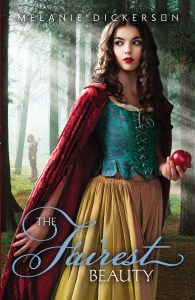
I wanted to read a fairy tale retelling, and I decided to try out this book. The Fairest Beauty is a retelling of the fairy tale, Snow White. This version of the classic fairy tale does not contain common elements of magic and fantasy; however, it has a Christian-biblical worldview.The setting is Bavaria during the Holy Roman Empire; the scenes are written as realistic historical fiction. There are several devout and pious Christians, especially the main character, Sophie. She prays frequently, reads scriptures, and often recalls what the priest told her in the past. Characters discuss forgiveness and redemption and ponder the will of God. The duchess is the mean queen, and although nothing fantastical happens when she talks to her mirror, generally, her every thought and her every action is eccentric and malevolent. Some themes and takeaways from this book are Sophie’s abuse and her desire to be loved and cherished, Gabe’s sibling rivalry, the downfall of evil (Psalm 10), and God’s protection. Finally, a happy ending (or beginning of the next chapter in life). It was great to read this Christian retelling of a fairytale. I did not know what to expect, but the book was fine. It was very creative how the author reworked the reality of this classic story.

Dates Read January to February 2021

Title: The Piper’s Pursuit

Author: Melanie Dickerson

Series: Hagenheim/FairyTale Romance Series(10)

Published by Thomas Nelson

Year: 2019

Pages: 321

Format Read: Kindle 

Language: English

Several fiction recommendations appeared on my Amazon account; this novel’s plot description seemed pretty interesting so I decided to read it. This is the second book by Melanie Dickerson that I have read. It’s a reimagining of The Pied Piper of Hamelin,  and it is another young adult medieval romance fairy tale with a Christian worldview. It’s around the 14th century in the Holy Roman Empire. The heroine, Katerina, is brave and strong with a disdain for arrogant men like her stepfather and the new guy in town, Steffan, who is the Duke’s “prodigal” son. They try to work together to figure out the mysteries in town: the children disappearing, the rat infestations, the beast attacks. They eventually uncover her stepfather Hennek’s wrongdoings and the story really takes off; it’s a suspenseful adventure. Steffan and Kat learn about each other and begin to trust each other and dismantle assumptions. Katerina has to be strong because her stepfather is abusive to her and her mother; she has to be the one to protect them and handle issues. Steffan felt wronged by his place in life such as being the younger son and not getting the inheritance. In the story, it’s revealed that disobeyed his father and he feels ashamed of this. The father is a Father God figure in that he forgives his son and shows him love and mercy.

Dates Read May to August 2021