Reviewing Beauty’s Daughter

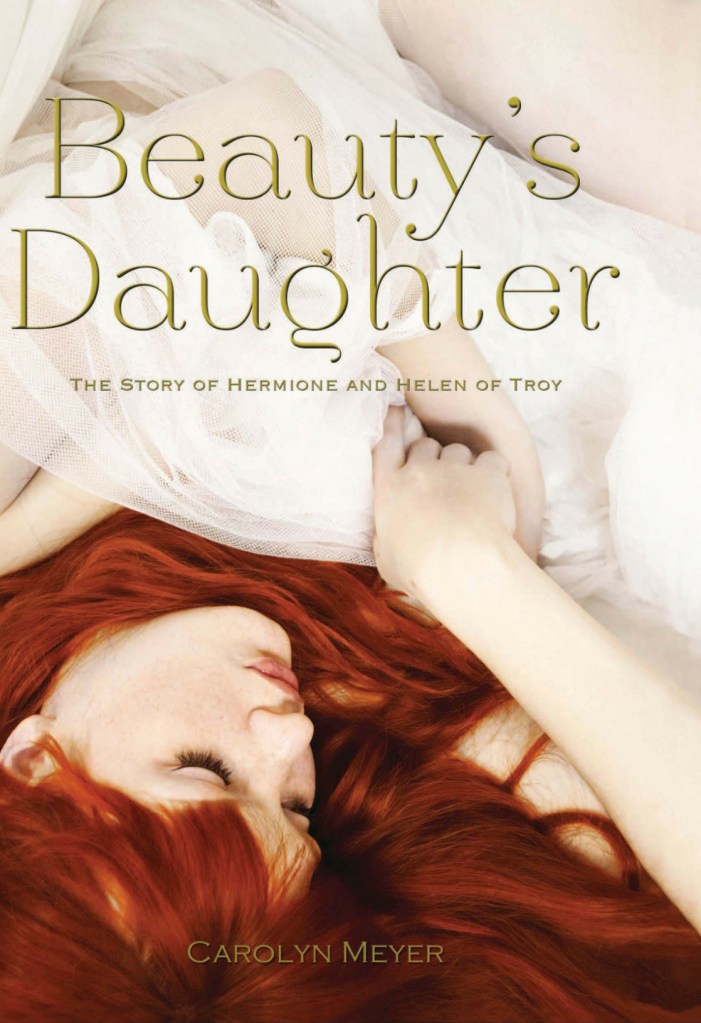
Title: Beauty’s Daughter: The Story of Hermione and Helen of Troy
Author: Carolyn Meyer
Published by ‎ HMH Books for Young Readers
Year: 2013
Format Read: Kindle
Pages: 353
Language: English
ASIN: B00AUZS6K6
Dates Read: 2024, March 27 to April 14

In the past, I have read In Mozart’s Shadow and Patience, Princess Catherine by Carolyn Meyer. I loved them both. I appreciated her vivid use of first person, how she incorporated many historical figures into the story, and her deep emotional characters. I wanted to read another one of her novels, but I wanted to read a story with an ancient setting. I liked Troy by Adẻle Geras when I read it in middle school, so I decided to try Beauty’s Daughter. 

Hermione is an evocative, inquisitive, and assertive protagonist. This story focuses on Hermione’s perspective before, during, and after the Trojan war. Throughout the novel, her thoughts and feelings of her mother, as well as others, change over time. The characters are used to convey plots of the war and other Ancient Greek stories (in case the reader is unfamiliar with these). Basically, many pages of the story’s first part is a summary of the Iliad and other ancient lore paraphrased from Hermione’s perspective with an emphasis on her relationships to others. I have not read all of these legends or myths, but I am familiar with the basic plot of many. Despite all of the details and references to Ancient Greek stories and characters, this book was still  an easy read, and it is just the right length.

Due to the winding plot filled with many disappointments for the characters, I thought that the novel’s ending would be bittersweet, and I was prepared for the death or disappearance of Hermione or her lover. Also, I had gotten names and prior Greek stories confused. Orestes and Pylades are characters in this book, so I thought they were going to turn into stars or constellations by the end of the story. Fortunately, they do not, but I assumed this because I confused their names with Orion and Pleiades, persons from another myth I’ve either read or heard about. Anyway, the ending was alright, a little bittersweet, but the leads got a good ending. 

There is an author’s note where Meyer explains how she uses myths combined with much of her own imagination and creativity to create this novel. I do think that this book is an easy read for 12 and up, but there is suggestive content in keeping with the spirit of the values and myths. I would recommend it if you like ancient world literature and retellings. I think that I like the other novels that I’ve read by this author better because they seem to have a better structure and more likable extra characters. 
Thoughts on The Oddling Prince

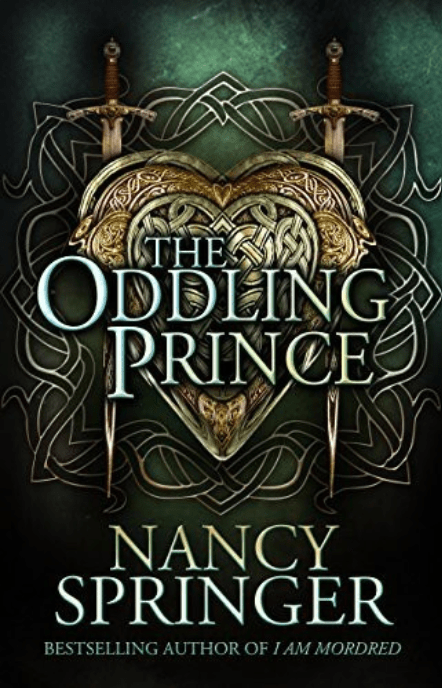
Title: The Oddling Prince
Author: Nancy Springer
Published by Tachyon Publications
Year: 2018
Format Read: Kindle
Pages: 288
Language: English
ASIN: B083G69DWZ
Dates Read: 2022, November 4 to November 11

This is the first book I’ve read by Nancy Springer. I’m trying to find books to read in the fantasy genre that are standalone. Many of her books are not on Kindle, and she has been writing for decades. So many of her books seem like gripping reads. I could not get this book’s blurb out of my head, so I decided to read it.

The chapters are like – “Chapter the First….Chapter the Fourth…”- I’ve never seen that before; that’s amusing. I thought that the fey were fairies like Tinker Bell, but in this story, they are like elves. The brother Albaric is a beautiful fey boy, even after becoming mortal. He is an oddling in both the place he left and in the mortal world because of parentage and circumstances. He feels like an outcast, but his half brother cares for him deeply, comforts him, and attempts to help him find peace.

Aric has nothing but love for his sibling and constantly expresses this in word and deed. Throughout the novel, these siblings are really touchy-expressive, and there is quite a bit of hand holding and hugging. While I really appreciated the profound affection that Aric had for his fey sibling Albaric, by Chapter the Twelfth, it started to seem a bit strange. I actually wondered if Aric was gay and romantically in love with his brother. In that chapter, lots of women are visiting this house and they are interested in him as a marriage candidate. However, Aric shows a lack of interest and sort of mocks them. When he finally shows a tad of interest in one girl, the conversation they have is about Albaric and what a wonder he is. Aric makes Albaric sing; the scene is written in a way that displays Aric oozing with devotion like his bro is a rock star. However, the brothers are just close brothers; Aric does fall in love with a female (albeit with a rather young one and a bit abrupt in my opinion).

The king, who is the boys’ father, acts capriciously throughout the whole novel. His character is dark and foreboding. The way he acts and the way people act toward him reminded me of Shakespeare’s Macbeth. I kept feeling like this book was going to end in a dark or ambiguous way, so it was hard to enjoy the read. The ending is alright. Thankfully, the king is better and misfortunes reversed; however, it was a bit unclear how exactly Aric and Albaric “healed” everything. Albaric was the most likable, in-depth, and captivating character by far, and I hope to read other books with characters like him. The recommended age on Amazon was 10 to 18, but 14+ due to suggestive themes and violence seems more accurate.

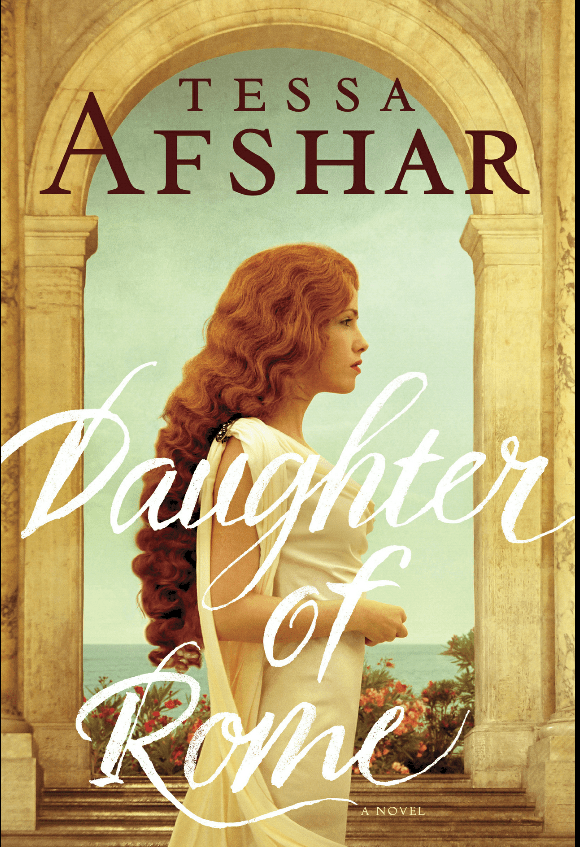
Regarding Daughter of Rome

Title: Daughter of Rome
Author: Tessa Afshar
Published by Tyndale House Publishers
Year: 2020
Format Read: Kindle
Pages: 378
Language: English
ASIN: B07T32RZMF
Dates Read: 2022, October 22 to October 30

The book was captivating. Every chapter is an adventure. The character, themes, and touching moments really pack a punch, and there is an edifying sermon every chapter. After reading Thief of Corinth, I wanted to read another book by this author. Priscilla and some others make a cameo appearance in Thief of Corinth. Some characters from that novel are mentioned in Daughter of Rome. I like how Afshar’s novels are somewhat linked, but they are not a series so a person can start with any book. At the start of the novel, I knew why Priscilla was trying to see the physician even before the reason was revealed. This was the only predictable part of the book for me, and the rest of the book was more unforeseeable and engaging. 

The book gave me the impression that it would mainly be about Priscilla, but Aquila seems to have an equal part. They start out as both outcasts from their world who come to find love and acceptance. I love how the book shows that they are partners in ministry.  For some reason, while reading this book, I kept imagining it as an anime. I wish there was an anime like this and relatively clean, popular and made especially for Christians. I especially loved how the story demonstrates Christian characters releasing or overlooking offenses, being able to love, extending hospitality, and showing grace even to some of the most infuriating people. I enjoyed how the story shows both married and single people caring for each other in a community and having deep love, concern, and relationships with each other like adopted siblings.

One scene that I thought that could have been crafted better is when certain characters go to rescue Paul from a kidnapping. The scene reminds me a bit of “The Beggar’s Opera” by John Gay. Also, when the dog Ferox is introduced, I was given the impression that there would be a mysterious path there that would be eventually unraveled. He’s a mysterious dog that shows up out of nowhere. He saves Priscilla and is a part of the family but there’s no unraveling or discovery of his origins like there is for the orphan Marcus. Sometimes, to me, the romance scenes were very passionate and a bit more descriptive than I anticipated or thought necessary. Also, who gets her brother’s “estate” at the end or does it go to creditors? The book is a great read overall, and I look forward to reading Afshar’s other works.