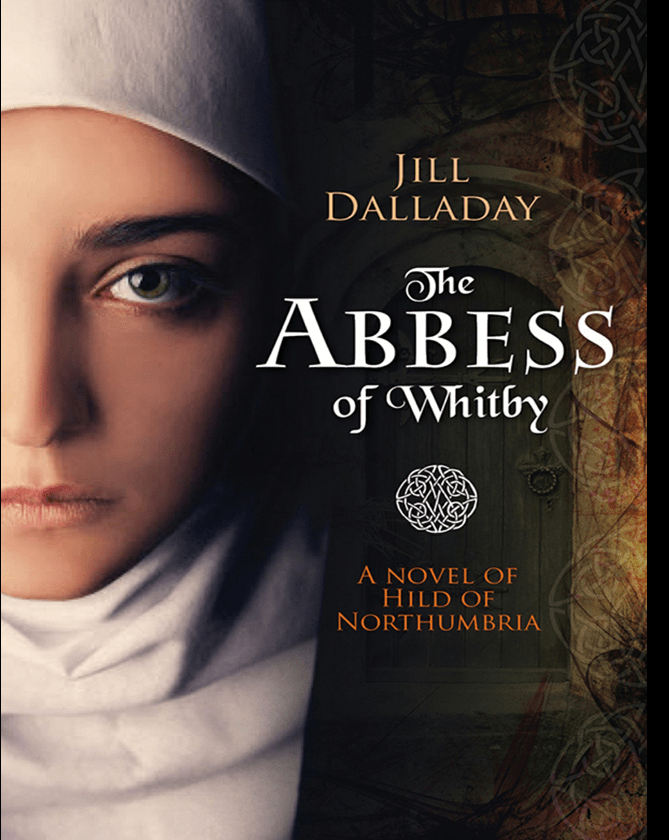
Reading The Abbess of Whitby

Title: The Abbess of Whitby: A novel of Hild of Northumbria
Author: Jill Dalladay
Published by Lion Fiction
Year: 2015
Format Read: Kindle
Pages: 380
Language: English
ASIN: B0156O6148
Dates Read: 2023, January 7 to 28

I found this book while browsing for different types of Christian books to read. I wanted to read a biography or historical fiction novel about a nun. Although I was unfamiliar with Hild of Whitby or Northumbria, this book seemed interesting.

The story takes place in 7th century Northumbria. This is a prose novel, but like a play, the author lists virtually all of the characters who will be in the story at the start of the book. She also lists maps, a family tree, and well-titled chapters. All of this detail before the story begins made me wonder if I would be able to keep up with all the details through the story, but it ended up being nothing to worry about. I like Dalladay’s writing style. Many sentences are packed full of detail, unusual words, and read rhythmic like poetry.

All types of events and adventures happen fast: conquests, battles, festivals, riding, etc. Many characters are historical figures, and many events that occur are recorded in history. While Hild is the novel’s main character, many others receive ample attention. I’ve never read a novel with so many historical characters, but thankfully, I was able to keep up. I only confused around 3 characters because they had similar sounding names.

The dynamic in the first part of the novel was the most intriguing to me: King Edwin and his people are pagans. Queen Elthelberga is a Christian from another place whom he married. She came to his kingdom with her own chaplain, monks, and other Christian people. Her chaplain is constantly striving for a Christian influence in the kingdom. Hild is growing up during this time. She, her sister, and mother are handmaidens to the queen and serve the king’s court.

Hild and others have to accept a compulsory baptism. She still prays to older gods and believes in them for years. Eventually, she grows to appreciate the Christian teachings and the monks’ gospel work. The dynamic with her husband and son are so fascinating, deep, and tragic that I was surprised that they were some of the few non-historical characters. By the last part of the book, she is helping to lead a double monastery or mixed community. This was cool to read about. You have people who are a part of the order but lay people as well. They help each other out. It seems like an amazing community with people of different stations. The monks spread literacy, travel to other places, and just seem to have so much peace and joy in life. A lot of people visit as well. They trade scrolls of scripture and enjoy teaching. Hild helps operate the community and the infirmary for the sick. The children help, play, and hunt. Caedmon makes a cameo, and he makes music.

This book was amazing to read, and I loved it. I especially enjoyed reading about the love that the different Christians had for each other and the gospel; this made me feel like I was transported far above the daily grind. I read online that the author passed away in 2019; I would have loved to read more of her books.

Some Quotes:

The chapel looked like a workshop: plain, bare wood, with monks on either side of a cross on a table. The queen knelt, head in hands, soft skirts fanning out in the straw. In a monotone, one group echoing the other, the men chanted softly. Mesmerized, Hild felt herself relax. So this was Ethelburga’s secret. Far from kindred, ill-matched consort of a fierce old warlord, prey to insult and pain, she always shed calm. It came from worshipping her God. There was no climax, none of Thor’s frenzy, no High Priest or sacrifice. The singing simply stopped, leaving an echo in the stillness. Then the monks bustled forward like ordinary men. (pg. 42)

“Erpwald!” Edwin had heard him. “Come and ride with me! About the route…” “Honoured, my lord.” He spurred forward: too eagerly for her liking. He was friendly, funny, and she wanted to know him better. Coifi, the king’s priest, awaited them in a hilltop grove, his white robes shining through the trees. His stance, his stillness, made Hild shudder; someone had told her that, before living memory, Eostre’s maid was herself the spring sacrifice. “Name?” With a start she saw Coifi holding out his arms for the child. “Anfled.” Edwin’s voice rang out. “To Woden’s shrine,” Coifi cried, bearing the baby into the trees. “Follow me!” (pg. 51)

Credo in unum Deum… Surprisingly soon she was, slowly and laboriously, writing the familiar Latin words. I believe in one God… And she really did, she realized with amazement. It had taken an age to shake off Thor and the fear of woods and thunderclaps, but at last she was winning through. Her new God did not mete out erratic punishments. He loved her as his daughter. “The Creed, summary of Christian belief,” Utta explained. “That and Jesus’ model prayer. The two basics.” And with a new clarity she understood why each convert must take them to heart before being baptized. (pg. 253)
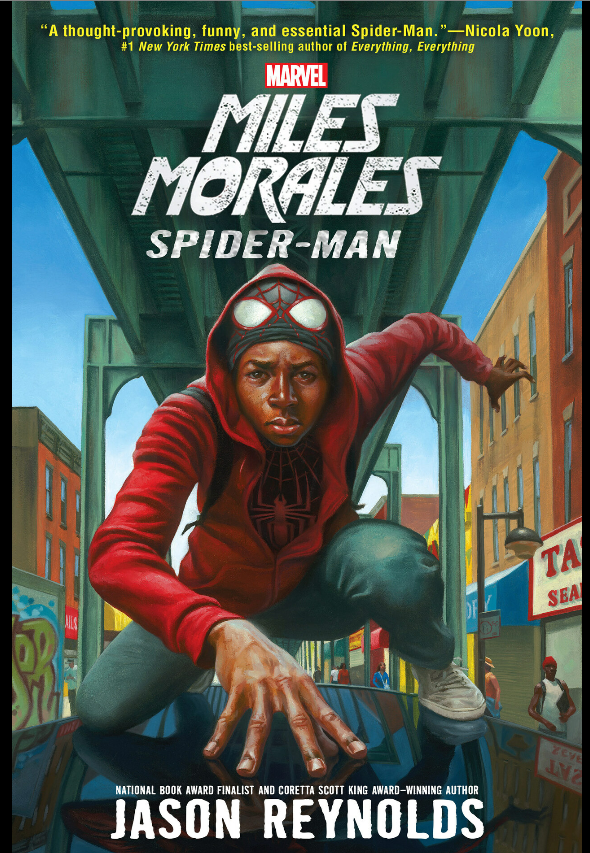
About Miles Morales: Spider-Man

Title: Miles Morales: Spider-Man
Author: Jason Reynolds
Published by Marvel Press
Year: 2017
Format Read: Kindle
Pages: 273
Language: English
ASIN: B071723XCR
Dates Read: 2022, November 17 to November 20

Not only are there superhero comics, but there are prose novels as well. There are several Marvel young adult fiction superhero novels that seem interesting. This one was very highly rated. Honestly, I’ve never read Spider-Man comics. I know about Miles Morales from the movie Spider-Man: Into the Spider-Verse (2018) and the Spider-Man animated series that aired from 2017 to 2020.

In this novel, I liked the vibrant portrayal of his parents, his best friend, and his home life. One of the things that I appreciated the most is the spirituality and religion. To read this in superhero fiction is a rare experience for me. Usually and lately, young characters in animated series, movies, and fiction books are portrayed as living in a secular vacuum: religion is never mentioned and spirituality has no effect on their culture and values. It seems that when organized faith is mentioned nowadays, it’s associated with something negative- fanaticism and anti-progress. I appreciated the mother being a loving, devout Catholic who makes her son attend mass with her. Although Miles does seem to be nominal Catholic, he does not portray the faith negatively, and I do cherish this realistic religious flourish.

This book is extremely detailed about Mile’s school life and classes. Miles is basically emo the whole novel, and half of the novel, it’s like you are taking the class assignments along with Miles and classmates. Peter Parker is not in this novel. Mile’s father, best friend, and the main superpowered villains know his secret identity. The uncle knew as well because it was partly his reason that Miles received the spider bite in the first place. Throughout the story, he constantly has flashbacks and premonitive dreams about his uncle’s death and weird stuff leading up to the confrontation with the villain.

I thought the villain was going to be a notable character in the Marvel universe, but I had no idea who this guy was. I think that he is an original villain crafted by Reynolds. There is no deep explanation of the villain. If I go by his book description, he’s basically a zombie version of Jefferson Davis, the President of the Confederate States of America. Reading this book. I see that the author is trying to show the importance of education and trying to overcome obstacles in your path to success. He wants to show the social influences and war shaping America when it comes to helping and not hindering black youth.

There are no more than a dozen mild cuss words and less than a handful of Christ’s name taken in vain, although I had hoped that the language would have been cleaner. Also, there is some coarse talking and mild violence.
This book was okay, but I expected more action and less brooding from Miles and company, but there were a few funny moments.

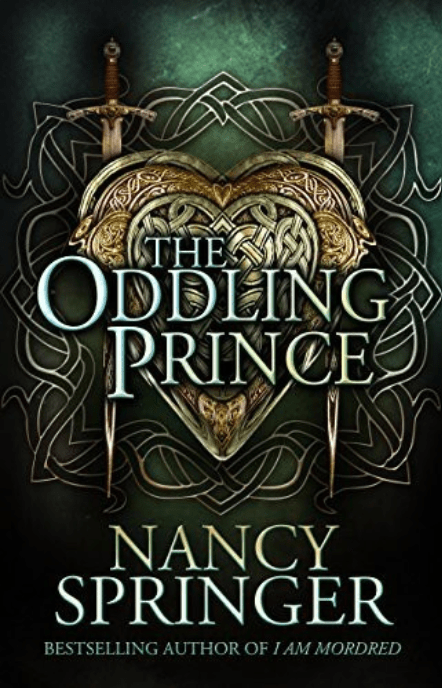
Thoughts on The Oddling Prince

Title: The Oddling Prince
Author: Nancy Springer
Published by Tachyon Publications
Year: 2018
Format Read: Kindle
Pages: 288
Language: English
ASIN: B083G69DWZ
Dates Read: 2022, November 4 to November 11

This is the first book I’ve read by Nancy Springer. I’m trying to find books to read in the fantasy genre that are standalone. Many of her books are not on Kindle, and she has been writing for decades. So many of her books seem like gripping reads. I could not get this book’s blurb out of my head, so I decided to read it.

The chapters are like – “Chapter the First….Chapter the Fourth…”- I’ve never seen that before; that’s amusing. I thought that the fey were fairies like Tinker Bell, but in this story, they are like elves. The brother Albaric is a beautiful fey boy, even after becoming mortal. He is an oddling in both the place he left and in the mortal world because of parentage and circumstances. He feels like an outcast, but his half brother cares for him deeply, comforts him, and attempts to help him find peace.

Aric has nothing but love for his sibling and constantly expresses this in word and deed. Throughout the novel, these siblings are really touchy-expressive, and there is quite a bit of hand holding and hugging. While I really appreciated the profound affection that Aric had for his fey sibling Albaric, by Chapter the Twelfth, it started to seem a bit strange. I actually wondered if Aric was gay and romantically in love with his brother. In that chapter, lots of women are visiting this house and they are interested in him as a marriage candidate. However, Aric shows a lack of interest and sort of mocks them. When he finally shows a tad of interest in one girl, the conversation they have is about Albaric and what a wonder he is. Aric makes Albaric sing; the scene is written in a way that displays Aric oozing with devotion like his bro is a rock star. However, the brothers are just close brothers; Aric does fall in love with a female (albeit with a rather young one and a bit abrupt in my opinion).

The king, who is the boys’ father, acts capriciously throughout the whole novel. His character is dark and foreboding. The way he acts and the way people act toward him reminded me of Shakespeare’s Macbeth. I kept feeling like this book was going to end in a dark or ambiguous way, so it was hard to enjoy the read. The ending is alright. Thankfully, the king is better and misfortunes reversed; however, it was a bit unclear how exactly Aric and Albaric “healed” everything. Albaric was the most likable, in-depth, and captivating character by far, and I hope to read other books with characters like him. The recommended age on Amazon was 10 to 18, but 14+ due to suggestive themes and violence seems more accurate.

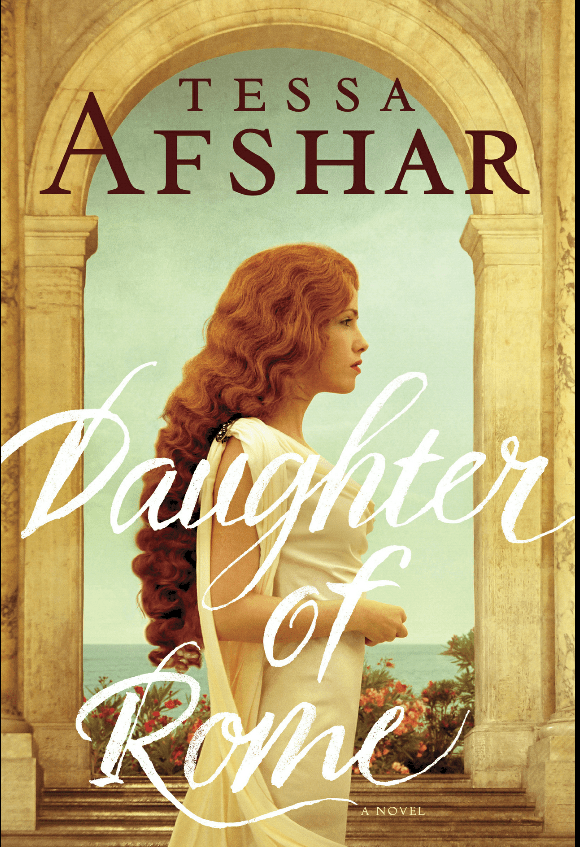
Regarding Daughter of Rome

Title: Daughter of Rome
Author: Tessa Afshar
Published by Tyndale House Publishers
Year: 2020
Format Read: Kindle
Pages: 378
Language: English
ASIN: B07T32RZMF
Dates Read: 2022, October 22 to October 30

The book was captivating. Every chapter is an adventure. The character, themes, and touching moments really pack a punch, and there is an edifying sermon every chapter. After reading Thief of Corinth, I wanted to read another book by this author. Priscilla and some others make a cameo appearance in Thief of Corinth. Some characters from that novel are mentioned in Daughter of Rome. I like how Afshar’s novels are somewhat linked, but they are not a series so a person can start with any book. At the start of the novel, I knew why Priscilla was trying to see the physician even before the reason was revealed. This was the only predictable part of the book for me, and the rest of the book was more unforeseeable and engaging. 

The book gave me the impression that it would mainly be about Priscilla, but Aquila seems to have an equal part. They start out as both outcasts from their world who come to find love and acceptance. I love how the book shows that they are partners in ministry.  For some reason, while reading this book, I kept imagining it as an anime. I wish there was an anime like this and relatively clean, popular and made especially for Christians. I especially loved how the story demonstrates Christian characters releasing or overlooking offenses, being able to love, extending hospitality, and showing grace even to some of the most infuriating people. I enjoyed how the story shows both married and single people caring for each other in a community and having deep love, concern, and relationships with each other like adopted siblings.

One scene that I thought that could have been crafted better is when certain characters go to rescue Paul from a kidnapping. The scene reminds me a bit of “The Beggar’s Opera” by John Gay. Also, when the dog Ferox is introduced, I was given the impression that there would be a mysterious path there that would be eventually unraveled. He’s a mysterious dog that shows up out of nowhere. He saves Priscilla and is a part of the family but there’s no unraveling or discovery of his origins like there is for the orphan Marcus. Sometimes, to me, the romance scenes were very passionate and a bit more descriptive than I anticipated or thought necessary. Also, who gets her brother’s “estate” at the end or does it go to creditors? The book is a great read overall, and I look forward to reading Afshar’s other works.